
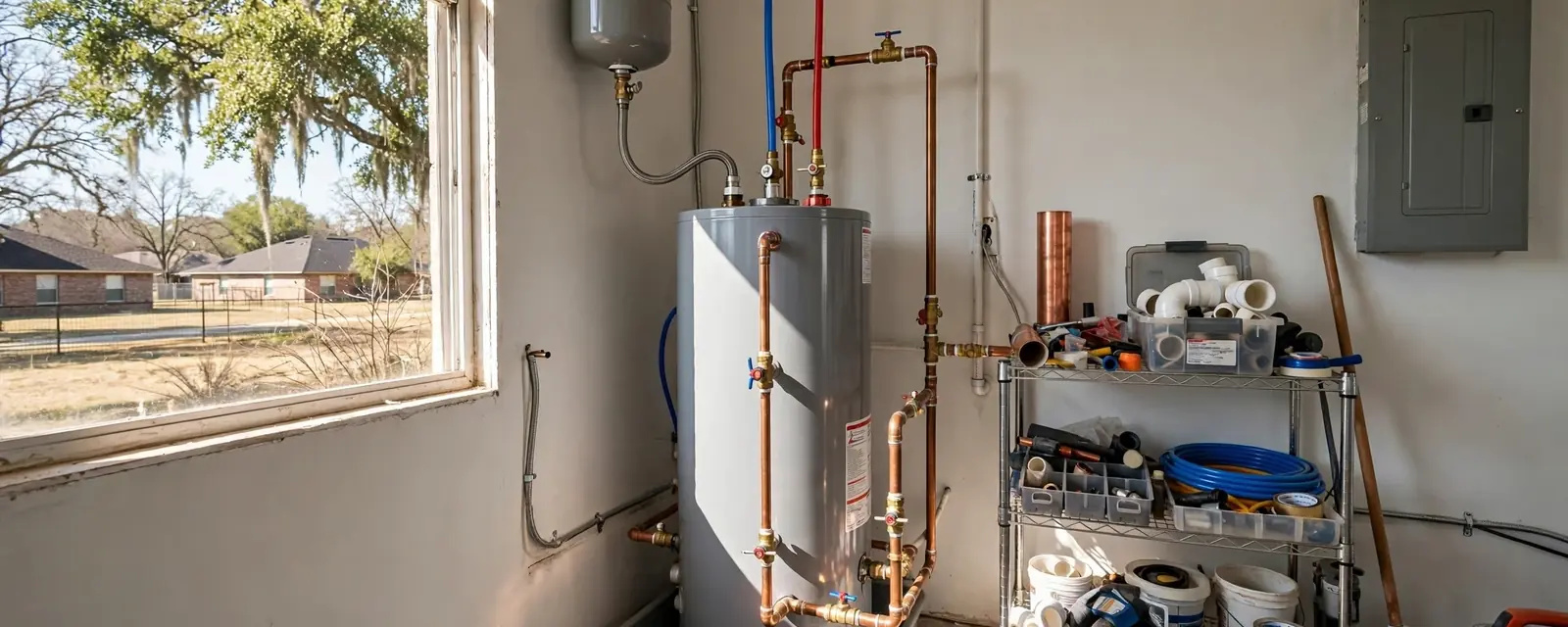
The heat pump idea in plain words
A normal electric tank makes heat by running current through a glowing element. A hybrid unit instead runs a small refrigeration loop, the same basic idea as a refrigerator in reverse. A fan draws room air across a coil, the refrigerant absorbs that warmth, a compressor concentrates it, and a second coil wrapped around the tank hands it to the water.
Moving heat takes far less electricity than creating it from scratch. That is the entire reason these units exist. The tradeoff is a taller, heavier tank with a fan, a compressor and a drain line, so it needs more room and more planning than a plain tank.
What the modes mean on the display
Most hybrids offer several modes. Names differ by brand, so read your own manual, but the logic is similar across the category.
| Mode | What it does | Good time to use it |
|---|---|---|
| Heat pump only | Runs the compressor and fan, leaves the elements off | Everyday use when the household has steady, predictable demand |
| Hybrid or auto | Uses the heat pump first, adds elements if demand spikes | Busy mornings, guests, a full tub plus a dishwasher cycle |
| Electric only | Runs the elements like a standard tank | Short-term backup if the heat pump side needs service |
| Vacation or away | Holds the tank at a low setpoint | A week or more away from the house |
Heat pump only is the quietest on the power bill but the slowest to recover after a big draw. Hybrid mode is where most families end up, because it behaves like a normal tank when the house gets busy and saves energy the rest of the time.
Space, airflow and the garage question
The unit has to breathe. Manufacturers call for a minimum volume of open air around the tank, and a tight closet with a solid door will starve it. Starved of warm air, the heat pump loses efficiency and leans on the elements, which defeats the purpose.
A garage works well in a warm climate because the air is usually mild. The side effect is that the unit cools and dries the air it pulls through, so a garage may feel a little cooler near the tank. In a utility closet, louvered doors or ducting kits solve the airflow problem. Whoever handles your water heater installation should check the exact clearances on the model you pick.
Things to check before you commit to a hybrid
- Open air volume around the spot, not just floor space
- Headroom, since hybrids stand taller than a standard tank
- A nearby place for the condensate to drain by gravity or by pump
- A dedicated electrical circuit sized for the model
- Noise tolerance, because the fan and compressor are audible nearby
- A route out of the house if the tank ever fails
Condensate: the part nobody mentions
When a heat pump pulls heat out of humid air, water drips off the cold coil. A hybrid needs a drain line for that water, the same way an air conditioner does. If the line clogs or kinks, the pan fills and you may see water on the floor that looks like a tank leak but is not.
Before you call about a puddle, check the condensate line. Look for algae, a bent hose or a pump that has stopped. A wet floor around a tank with a stained, rusty bottom is a different story, and that points to a failed tank. If you are unsure, our water heater replacement team can sort out which one you have.
For code questions on a hybrid unit, the controlling documents are the manufacturer's installation standards and the IPC based Florida Building Code, Plumbing. Condensate drainage and clearances are the usual inspection points.
Not sure which heater suits your house?
Describe the spot where the old tank sits and our dispatcher can line up a licensed plumber to look at clearances, drainage and wiring. Call now and ask for a same-day appointment when available.
Does a hybrid fit coastal Florida?
Warm, humid air is the fuel a heat pump runs on, so the climate is friendly to this equipment. The coast adds a different pressure, which is salt air. Units kept outdoors or in an open carport can corrode faster, so most owners keep them inside a garage or conditioned utility space.
Flooding and storm surge matter too. Jacksonville Beach sits at sea level, so ask where the tank should sit relative to the garage floor, and whether a small stand makes sense. Your installer can advise on that, and it is worth raising before the old tank comes out.
What you can do yourself and when to call
Homeowners can handle a few simple tasks. Clean or replace the air filter if the model has one, and keep boxes and bikes away from the intake. Check the condensate line for blockage, and keep the top vents clear. Read the error code on the display and write it down.
Call a licensed plumber for anything involving the refrigerant side, the electrical connections, the relief valve, or water leaking from the tank itself. Do not open the sealed system. If the tank is leaking, shut off the cold water at the unit and the power at the breaker, then call.
| Question | Hybrid heat pump | Standard electric tank |
|---|---|---|
| How it heats | Moves heat from the air, elements as backup | Elements only |
| Space needed | More floor, more headroom, more airflow | Compact |
| Drain line | Condensate line required | Only the relief line |
| Noise | Fan and compressor hum | Nearly silent |
| Upfront cost and operating cost | Costs more to buy, costs less to run | Costs less to buy, costs more to run |
| Best fit | Garage or large utility room, steady use | Tight closet or very small household |
What local water and permits mean for your install
The City of Jacksonville Beach supplies your water from six wells in the Floridan Aquifer, aerated to take out the rotten-egg smell and then chlorinated. The city's 2025 water quality report does not list a hardness figure, so test your tap or ask the Water Division for the annual report before you assume anything about scale inside a new tank.
A water heater swap usually involves a permit conversation. The Building Inspection Division at 11 North Third Street, 904-247-6100, handles plumbing permits through an e-permit, and work may not begin until the permit is approved and posted on site. Ask them whether your specific swap needs one, and confirm your plumber pulls it. Neighbors in Neptune Beach deal with a different office, so the answer can change when you cross the line.
When a hybrid is the wrong call
A hybrid is a poor match for a small closet with no airflow, a home with no practical drain route, or a household that wants the lowest purchase effort possible. In those cases a standard tank or a tankless unit may serve better. A plumber who is not selling one product will say so.
Also consider timing. A heater that has already failed leaves little room for shopping, and the hybrid takes more preparation than a drop-in tank. If you have a leaking tank right now, shut things down and call, then talk about options once the water is off.
Quick answers for Jacksonville Beach homeowners
Usually it needs a dedicated circuit sized for the specific model. Some replace an older tank on the same wiring, others do not. A licensed plumber or electrician should check the breaker, wire gauge and disconnect before the new unit goes in.
The most common harmless cause is the condensate line backing up or the pan filling. A drip from the tank body, the fittings or the relief valve is a different matter and needs a plumber. Shut the cold supply and power off if the leak looks steady.
It can lower the temperature a little near the unit while it runs, since it pulls heat from the air. Most people notice it only in a small enclosed space. It also dries the air slightly, which can be a mild benefit in a humid garage.
Yes. You will hear a fan and compressor hum, roughly like a small dehumidifier. A garage placement hides most of that. Putting one against a bedroom wall is the usual mistake.
The city's Building Inspection Division runs a plumbing e-permit, and work may not start until a permit is approved and posted on site. Whether a like-for-like swap needs one is a question for that office at 904-247-6100, so ask before work starts.
If your tank is leaking or the hot water is gone, we can dispatch a licensed plumber and talk hybrid versus standard once the mess is handled.
☎ (904) 561-8133