
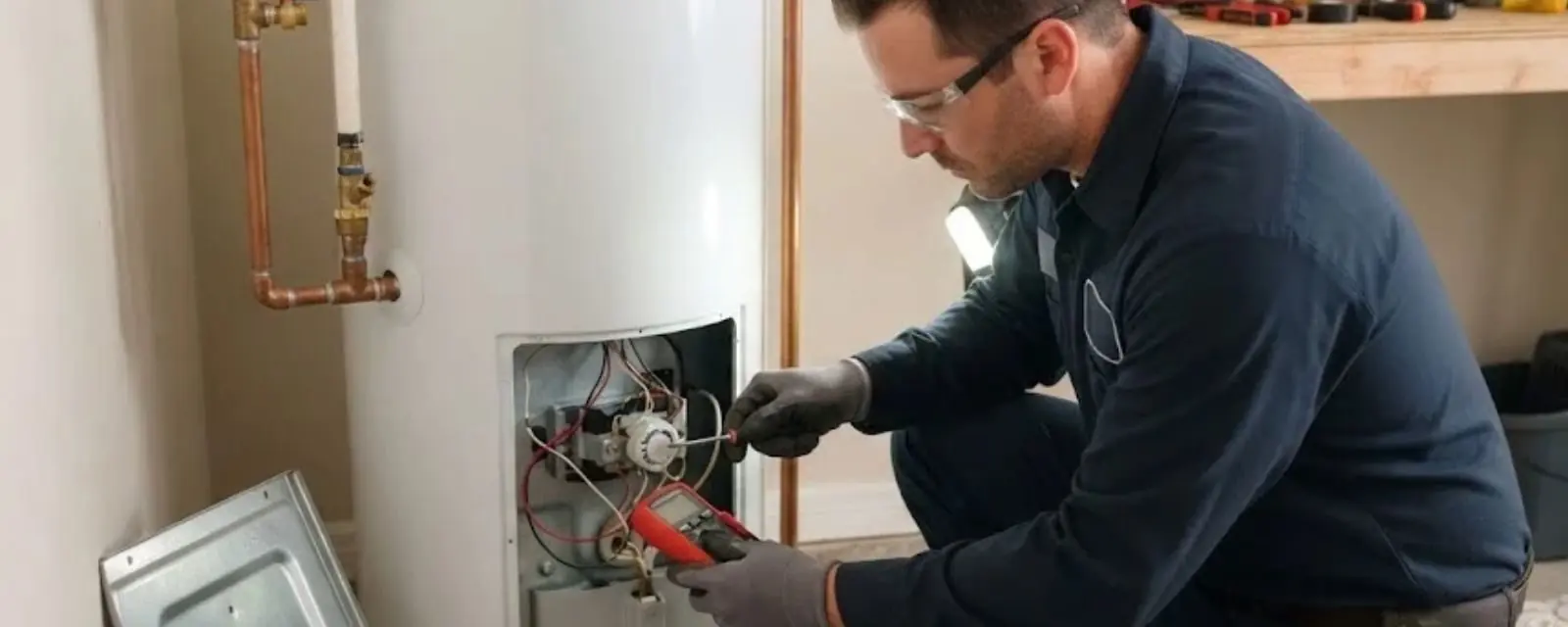
Leaking tank or no hot water? Do these things first
A small drip at a fitting and a tank that has rusted through look alike for the first ten minutes, so the first moves are the same. Cut power at the breaker for an electric or hybrid unit. For gas, turn the gas control knob to off or pilot. If you smell gas, leave the house and call the gas utility or 911 before anything else.
Then close the cold supply valve on the pipe feeding the top of the tank. Open a hot tap somewhere in the house so pressure bleeds off. Photograph the puddle, the data label on the tank and any water damage, because your insurer will want them later.
Water heater leak: garage, closet and slab-edge puddles
Jacksonville Beach sits at or near sea level, and many local houses are built on a slab with the heater in the garage or a hall closet. That layout hides leaks. Water from a garage heater runs along the slab and slips under a wall plate, so the first sign is often a musty smell or a swollen baseboard.
We check the heater first, then the lines around it. A leak at the drain valve, the relief valve or a supply connector is a repair. Water weeping from the tank's lower seam or through the jacket means the steel has failed, and water heater replacement is the answer. If water keeps appearing after the heater is isolated, a line under the slab may be the real culprit, and slab leak repair is the next stop.
| What you see | Likely cause | Repair or replace |
|---|---|---|
| Drip from a pipe at the top | Loose or corroded supply connector or union | Repair with a new connector, usually a short visit |
| Water running from the discharge pipe on the side | Relief valve opening from pressure or heat, or a worn valve | Repair, but find out why it opened. Thermal expansion is common |
| Wet around the bottom drain valve | Worn drain valve or sediment holding it open | Repair by replacing the valve |
| Water pooling under the tank, jacket damp | Tank liner or seam failure | Replace. A steel tank cannot be patched |
| Rust streaks at the base of a gas unit | Condensation, a leak above, or a failing tank | Inspect first, then decide |
| Water on the floor but the heater is dry | Nearby supply line, washer box or slab line | Trace the leak before touching the heater |
Why the water is cold, lukewarm or running out fast
A heater that is not heating has several possible causes, and the fuel type decides where we look first. Electric units usually lose a heating element or a thermostat, and a tripped high-limit reset is a quick check. Gas units lose heat when the pilot goes out, the thermocouple weakens or the burner assembly clogs with debris.
Running out of hot water in ten minutes points to a broken dip tube or a failed lower element. Both are repairable on a tank that is otherwise sound.
Electric tank
Upper and lower elements, thermostats and the high-limit switch. We test each with a meter instead of swapping parts and hoping.
Gas tank
Pilot assembly, thermocouple, gas control valve, burner and flue draft. The thermocouple and pilot are gas-only parts, so an electric heater never has them.
Hybrid heat pump
Air filter, condensate drain, fan and the heat pump circuit, plus the backup elements. A clogged condensate line is the most common nuisance call.
Any tank type
Relief valve, drain valve, anode rod and supply connectors are the wear items.
Hurricane season, power outages and a heater that will not restart
What storm outages do to a water heater
Hurricane season runs June 1 to November 30, and Jacksonville Beach has lived through Hurricane Matthew in October 2016, with mandatory evacuation and major flooding. Outages and surges both stress a heater. After power returns, an electric unit that trips its breaker repeatedly or a hybrid that shows a fault code deserves a service visit before you keep resetting it.
If floodwater has reached the heater, do not restart it. Water inside a gas control valve or electric controls can make the unit unsafe even if it seems to work. Have a plumber inspect it and, for gas, have the valve replaced if it was submerged. That decision is about safety first, and cost second.
What decides repair versus replacement
We repair a heater when the tank is sound and the failed part is cheap compared with the unit. Elements, thermostats, valves, connectors and thermocouples fit that description. We recommend replacing it when the tank itself leaks, when the heater has repeated failures, or when rust shows in the hot water.
If you already suspect the tank is done, read through water heater installation to see what a permitted swap involves. If you are leaning toward an on-demand unit, the tankless water heater page explains the service side. Sediment and mineral scale also shorten tank life, and a water softener or filtration system is worth discussing once you have tested your tap.
Repairs follow the same safety logic as a new install under the IPC based Florida Building Code, Plumbing. A relief valve that drips or a vent that is not drawing is a code issue as well as a comfort issue, so we flag it instead of working around it.
Heater down and water on the floor?
Call now and a dispatcher will book a licensed plumber, shut-off guidance included. After-hours and weekend calls go to the same line.
What drives the price of a water heater repair
We do not quote prices on a web page because the real number depends on what is failing. You get a clear price before work starts, and these are the things that move it.
Homeowner policies usually cover sudden and accidental discharge damage, not wear, gradual leaks or the failed heater itself. Check your own policy and photograph the damage before cleanup.
Tell the dispatcher what you see and we will talk through the likely scope before a plumber is on the way.
Water Heater Repair questions in Jacksonville Beach
Yes. Our dispatch line runs 24/7 and takes after-hours calls for leaking tanks, gas control problems and heaters that trip breakers. We do not promise an arrival time on the phone, but we tell you honestly what is available that day.
On electric units, check the breaker and the red reset button on the upper thermostat first. On gas units, look at whether the pilot is lit. If either is fine, the cause is usually a failed element, thermostat or thermocouple, and a plumber can test each in one visit.
Dry the area, then watch where the first drop forms. A drop at a pipe or valve is usually a repair. Water that appears from under the jacket or from the tank bottom means the tank has failed. A flashlight and a paper towel held under each fitting tell you a lot.
No. Turn off the power or gas and close the cold water valve. A leaking electric unit with a wet element is a shock risk, and a gas unit with a leak can damage the burner area. Do this before you call.
It is a small sensor next to the pilot flame. When the pilot goes out, it cools and tells the gas valve to shut. A weak one keeps dropping the pilot. It exists only on gas heaters and is a common repair.
Yes. If the tank is leaking or the heater is failing repeatedly, we explain that a repair would only delay the replacement and let you decide with the price in front of you.
If the heater is leaking or silent, the dispatch line is open tonight.
☎ (904) 561-8133