
Why slabs and low ground matter on the beaches
Most homes in Florida are built slab-on-grade, which means the house sits on a concrete pad poured at ground level and the plumbing is cast in or buried under it. Jacksonville Beach sits on a barrier island, with land at or near sea level and roughly two-thirds of the city area made up of water. Your home is very likely on a slab, though an older or raised house may differ, so confirm what you have.
Low ground means the soil beneath a slab is often damp on its own. That cuts two ways. A cool, damp patch at the slab edge is not proof of a leak, which is why we confirm with listening and pressure tests before anyone cuts concrete. It also means a trench dug to reach a pipe can fill with groundwater, so we plan the work with pumping and clean-up in mind.
Warm spots on the floor
A patch of tile or wood that feels warm underfoot, especially when the heater is not in use, often means a hot water line is leaking beneath it. The escaping hot water heats the concrete above it. You may also notice the water heater running more often, or your hot water bill rising with no change in habits.
Water coming up through the floor right now
Water under a slab looks for a way out. It travels to cracks, expansion joints and the slab edge, then wicks into carpet, bubbles under laminate, or pushes tile grout apart. If a wet area keeps returning after you dry it, or the baseboards swell from the bottom, the water source is under pressure and not a one-time spill.
Hearing water when nothing is running
A faint hiss or trickle in a quiet house, most noticeable at night, is the classic sign of pressurized water escaping. Stand on the floor in different rooms and compare. The sound is often loudest above the damaged section. We use ground microphones to narrow it to a few feet.
The meter that keeps moving
Close every fixture and look at the water meter. If the dial or leak indicator still spins, water is leaving the system somewhere. A moving meter together with any of the signs above makes a slab leak the leading suspect, and it is worth an after-hours call. For other possible sources, our leak detection service rules out toilets, irrigation and drips before anyone discusses concrete.
| Option | Best when | What it involves | Trade-off |
|---|---|---|---|
| Spot repair | One failed section in an otherwise sound line | Locate the leak, open the slab above it, replace the section | Fastest and least disruptive, but other weak spots can fail later |
| Reroute | Pipe is accessible overhead or in walls | Abandon the slab section and run new pipe through the attic or walls | Avoids breaking concrete, but adds visible or reachable pipe runs |
| Repipe | Multiple leaks or aging material | Replace the affected supply lines throughout the house | Higher upfront effort, fewer repeat failures |
| Epoxy coating | Specific situations on suitable pipe | Coat the inside of the pipe after cleaning | Not appropriate for every pipe or every failure, so we only recommend it when it fits |
Deciding between a spot repair and a reroute
Spot repairs make sense when the pipe is otherwise in good shape and the leak is near an accessible area. Rerouting makes sense when the line under the slab is hard to reach or has failed more than once. We explain what each path means for your floors, your walls and your schedule.
If we find several pinhole leaks along the same line, patching one just moves the pressure to the next weak point. In that case a full repiping plan usually costs less over time than repeated slab openings, and we show you where each leak is so you can compare.
A slab repair, a reroute or a repipe all fall under the state plumbing code, Florida Building Code, Plumbing, a code that follows the IPC. Which of them needs a permit is a city question, so confirm it before the slab is opened.
Floor warm and meter spinning?
Call now and tell the dispatcher what you hear and feel. We will set up a visit and help you protect the house meanwhile.
What a slab leak visit looks like
Typical sequence on site
- Confirm the leak with a meter test and by isolating the water heater and each branch line
- Listen along the floor with acoustic equipment and mark the loudest zones
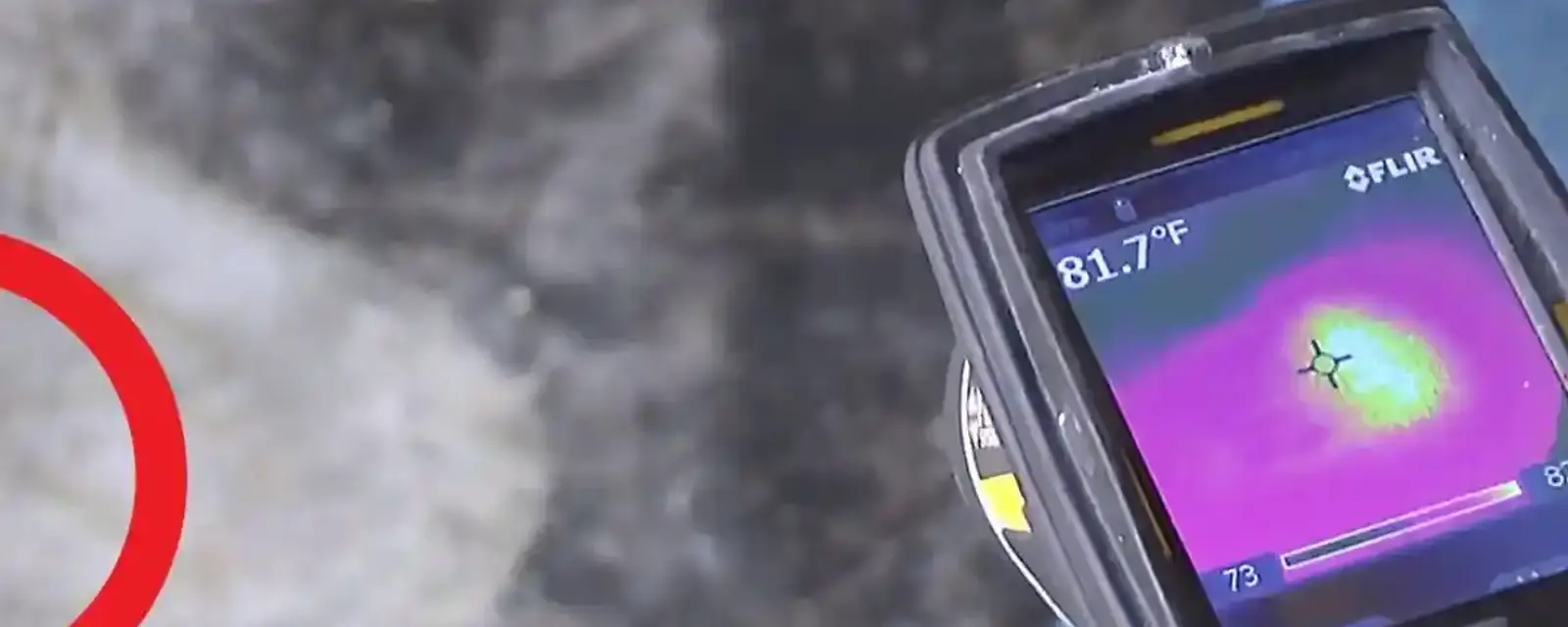
- Scan with thermal imaging to follow a hot line's path
- Pressure test the suspect line to confirm before cutting
- Walk through the options, the likely floor impact and a clear price before work starts
Cutting concrete is dusty and loud, and it often uncovers flooring that was not meant to be disturbed. We cover and vacuum, and we discuss with you in advance which finishes need patching afterward. If the wet area turns out to be outside the footprint, it may be the supply line from the meter, covered under water line repair. Permit questions for repairs or repipes go to the Building Inspection Division at 904-247-6100.
What drives the price of a slab leak repair
No two slabs are alike, so we price from what we find and give you a clear price before work starts.
Homeowner policies often respond to sudden water damage, but many exclude the pipe itself and gradual leaks, and some cover the cost of tearing out to reach the leak while others do not. Photograph the damage and read your policy before you start repairs.
Call and a dispatcher will walk through what applies to your home.
Slab Leak Repair questions in Jacksonville Beach
Yes. Our dispatch is staffed 24/7 and licensed plumbers go out after hours for active slab leaks, hot floors and water coming up through the flooring. Same-day appointments are offered when available for less urgent concerns.
Close the main valve while you wait if water is spreading. We also dispatch to Neptune Beach and nearby towns.
Most Florida homes are slab-on-grade, and many Jacksonville Beach homes are as well. If you cannot tell, look for a lack of crawlspace or basement access and a garage floor level with the house. Older or raised homes may differ, and we confirm on site.
We isolate sections of piping and watch the meter, then listen along the floor and scan for heat. A pressure test narrows it further. Each method rules out part of the house until the location is clear.
A spot repair does mean opening the floor and concrete above the leak. A reroute usually avoids that by running new pipe through attic or wall space. We explain which one fits before work starts.
Jacksonville Beach is low, near sea level, so the soil below a slab can be saturated. A trench may fill with water, and we plan for it, pumping and shoring the opening as needed.
Yes, if the floor is wet or hot. Close the main and open a low faucet to relieve pressure. Leave the water heater off if the leak is on the hot side.
Plumbing work in the city uses a plumbing e-permit, and work may not begin until it is approved and posted on site. Ask the Building Inspection Division at 904-247-6100 how your specific repair is classified.
A warm floor or a spinning meter is reason enough to pick up the phone tonight.
☎ (904) 561-8133