
Water is escaping right now and you do not know from where
Start with the signs that mean act immediately: a ceiling that sags or drips, a floor that feels spongy, the sound of running water in a silent house, or a wet patch that grows between morning and evening. Any of these justifies an after-hours call, because wet insulation and drywall can start to break down quickly and neighboring rooms get pulled in.
Before we arrive
A few minutes of preparation saves search time once the plumber is on site.
Shut off the main only if water is active
If you can see water spraying or flowing, close the main shutoff and open one low faucet to drain pressure. If nothing is visibly flowing, leave the water on so we can test the system under normal pressure.
Photograph the damage
Take wide and close photos of stains, wet areas and the water meter face. They help us narrow the search and they help if you file a claim later.
Move belongings and cut power near wet areas
Lift rugs, electronics and boxes off wet floors. If water is near outlets or a panel, leave the breaker alone and stay out of the area until it is checked.
Note when it started
Tell us when you first saw the stain or heard the sound, whether hot or cold taps change it, and which fixtures were running at the time.
How a hidden leak actually gets found
Guessing is how people end up with four holes in a hallway wall. We work from the least invasive method toward the most, and each tool answers a different question. Some tell us whether the leak exists, others tell us where.
Acoustic listening
A ground microphone or contact sensor picks up the hiss or hum of pressurized water escaping a pipe. It works well on buried supply lines and on pipes under a slab, where the sound travels through the material.
Thermal imaging
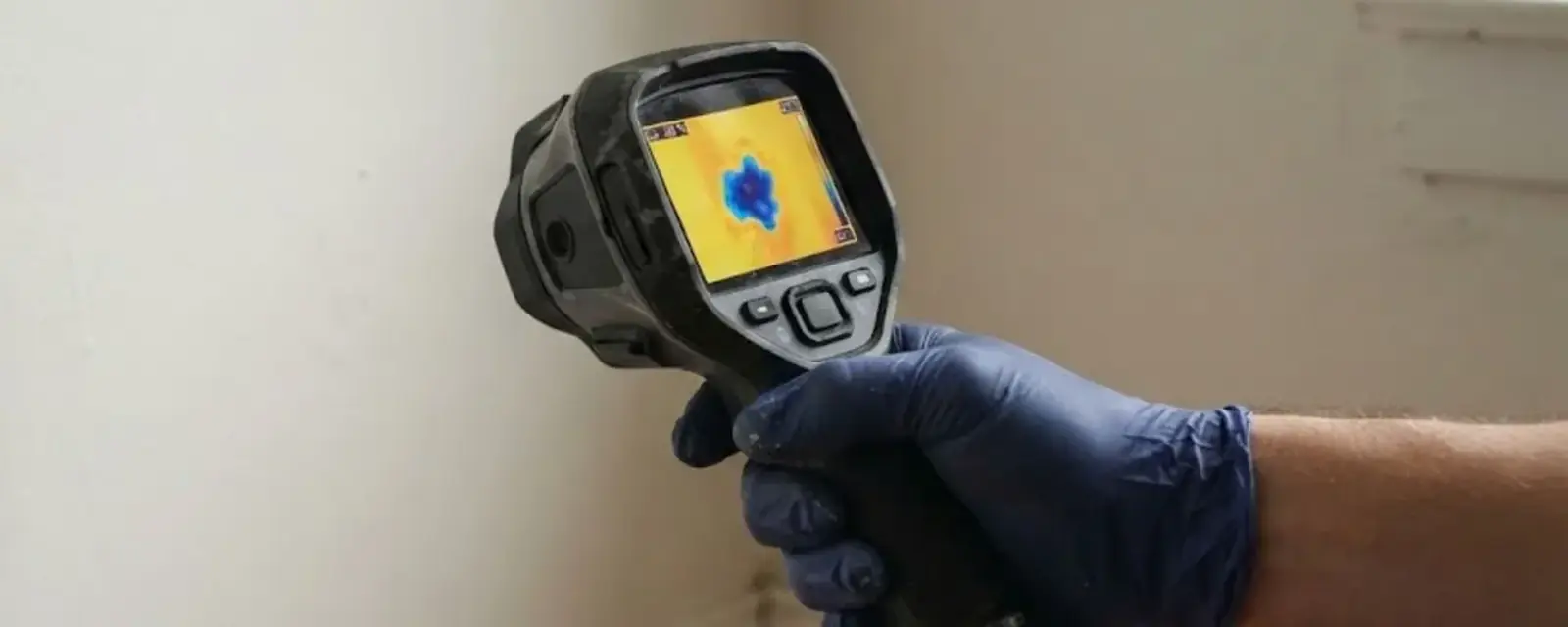
An infrared camera shows temperature differences behind drywall and under flooring. A hot water leak glows warm, and evaporating moisture reads cool. It points us to the area, and we confirm with a moisture meter.
Pressure testing
We isolate sections of piping, pressurize them, and watch a gauge. A section that cannot hold pressure has the leak. This is how we separate a supply problem from a drain problem.
Tracer gas
For stubborn cases, a harmless mix of hydrogen and nitrogen is pushed into a closed line. The gas escapes where the water does, and a sensitive detector picks it up at the surface.
Meter still running with every fixture off
The simplest leak test costs nothing and takes a few minutes. Turn off every faucet, appliance and ice maker, then find the meter box near the curb and lift the lid. Look at the small leak indicator or low-flow dial. If it keeps moving with nothing on, water is leaving the pipes somewhere between the meter and your fixtures.
In Jacksonville Beach the city runs its own water utility, so the meter and the street side of it belong to the city. If you want a reading confirmed or suspect the city side, the City water and sewer office takes calls at 904-247-6241 on weekdays from 8:00 to 4:30 at City Hall, 11 N Third Street. If nothing is wrong on their side, the leak is yours, and that is when you call us.
Once you know it is on the private side, the dial also helps us. A fast spin suggests a large break, such as a failed fitting or a damaged line. A slow creep suggests a pinhole, a worn toilet flapper, or a slow drip at a fixture, and we check the cheap suspects first.
A stain on the ceiling or a soft spot in a wall
Water rarely shows up where it starts. It runs along a joist or down a pipe and drips from the lowest point, so a ceiling stain can sit several feet away from the source. We trace upward from the stain with thermal imaging, then check the likely sources above it: a bathroom supply line, a tub drain, a water heater pan, or an air handler drain.
A brown ring that dries and returns after each shower points to a drain or tub overflow. A stain that grows on its own in dry weather points to a pressurized supply line. That distinction decides whether we pressure test the supply side or run water through the drain, and it keeps the opening in the drywall small.
Dampness or odor under the house
Many beach homes sit on a slab, but some are raised or have an access crawlspace, and the area underneath is where supply and drain leaks hide for the longest time. Signs are a musty smell, bowed subfloor, warped baseboards, or a floor that is cool and damp in one zone. We inspect the space, look for dripping joints, rusted hangers and wet insulation, and then pressure test to confirm.
If your home is on a slab and you notice a warm spot in the floor or hear water with everything off, the leak may be under the concrete. That is a different repair path, and our slab leak repair page explains how those are handled.
Buried lines, soggy yards and pressure that drifts
A leak on the pipe that runs from the meter to the house often shows as a patch of lawn that stays green and wet in dry weather, a sinkhole-soft spot, or pressure that has quietly dropped. The line is out of sight, so we use acoustic listening along its path and mark the loudest point before anyone digs.
Once the location is marked, the repair is usually a short excavation and a new section of pipe. If the line is old and has multiple failures, we will talk through the options on the water line repair page so you can weigh a spot fix against a full replacement.
Irrigation and sprinkler leaks
Sprinkler systems leak at broken heads, cracked risers and failed valve diaphragms, and a zone that runs too long can add a surprising amount to a water bill. If the meter test shows flow only when the system is on, or one zone stays soggy, we isolate that zone with a pressure check and repair the exact fitting.
Pool and spa plumbing
Pool leaks are a separate question. A bucket test tells you whether the loss is evaporation or plumbing, and if the equipment pad or return lines are suspect, we can pressure test the pipes between the pool and the pump. Shell cracks and liner problems belong to a pool specialist.
The meter box and yard shutoff
A constantly wet meter box usually points to a weeping fitting near the meter or the shutoff valve. If the fitting is on the customer side, we can replace it. If the wet spot is on the city side, call the city and avoid tampering with their equipment.
| What you notice | Likely source | How we confirm |
|---|---|---|
| Meter dial moves with all fixtures off | Supply leak, running toilet, or irrigation fault | Isolate branches and watch the dial, then pressure test |
| Ceiling stain that grows in dry weather | Pressurized supply line above | Thermal scan and moisture meter, then targeted opening |
| Ceiling stain that comes and goes with showers | Tub drain, overflow, or shower pan | Run water through the fixture while observing |
| Warm spot on the floor, sound of water | Hot line under the slab | Acoustic listening and thermal imaging |
| Wet lawn strip between meter and house | Buried service line | Ground microphone along the line path |
| Musty crawlspace and bowed subfloor | Slow drain or supply drip | Visual inspection plus pressure test |
Locating a leak is diagnostic work, so the code question comes after. Once the leak is found, the repair is done to the Florida Building Code, Plumbing, which is built on the International Plumbing Code (IPC), and the city building division can say whether the repair needs a permit.
Suspect a leak at 2 a.m.?
Call now and a licensed plumber will talk you through the meter check and book the earliest visit available.
What decides the cost of finding a leak
Detection is billed on the work involved, and we give you a clear price before work starts. These are the factors that move the number.
Homeowner policies often help with sudden and accidental water damage, but they generally do not cover a gradual leak, wear, or the failed pipe itself. Some policies treat the cost of locating a leak differently, so check yours and photograph everything before cleanup.
Call us and a dispatcher will explain what to expect for your situation and give you the real number.
For neighbors just up the road, we also dispatch to Neptune Beach and the surrounding Beaches towns, so a leak is not left waiting on geography.
Leak Detection questions in Jacksonville Beach
Yes. Our dispatch line is open 24/7, and a licensed plumber can come out after hours for active leaks, ceiling drips and meters that will not stop spinning. Same-day appointments are offered when the schedule allows for lower-urgency cases.
If water is actively spraying, close the main first. If it is a slow suspected leak, do the meter check and tell the dispatcher what you saw.
Everything from the meter toward the street belongs to the city's system, and everything on the house side belongs to you. Lift the meter lid and check whether the dial moves with all fixtures off. If you want to confirm anything about the city side, call the City water and sewer office at 904-247-6241 during weekday hours.
If the problem is inside your property line, we handle it.
Only as a last step and only small ones. We narrow the area with thermal imaging, listening and pressure tests first, then open the smallest section needed to see the pipe. Most of the time that is a single patch you can repair with ordinary drywall work.
Often yes. Acoustic listening picks up pressurized water through concrete, and thermal imaging can show a warm path from a hot line. We confirm before recommending any cutting. The repair options for those leaks are laid out on our slab leak page.
Run the meter test with everything off. A moving dial confirms water is leaving the system. Common hidden culprits are a toilet flapper that does not seal, an irrigation zone with a cracked fitting, and a buried line. Tell us what you found and we will start with the likeliest cause.
It depends on your policy. Many cover sudden damage but not gradual leaks or the pipe itself, and some separate the cost of finding the leak. Read your policy or ask your agent, and keep photos and our written findings for the claim.
Yes. We isolate zones, check valves, and pressure test the lines to find broken heads, cracked risers and failed fittings. If the problem is in the controller or programming, that is a job for an irrigation contractor.
If water is moving where it should not be, a dispatcher is ready to start the search.
☎ (904) 561-8133