
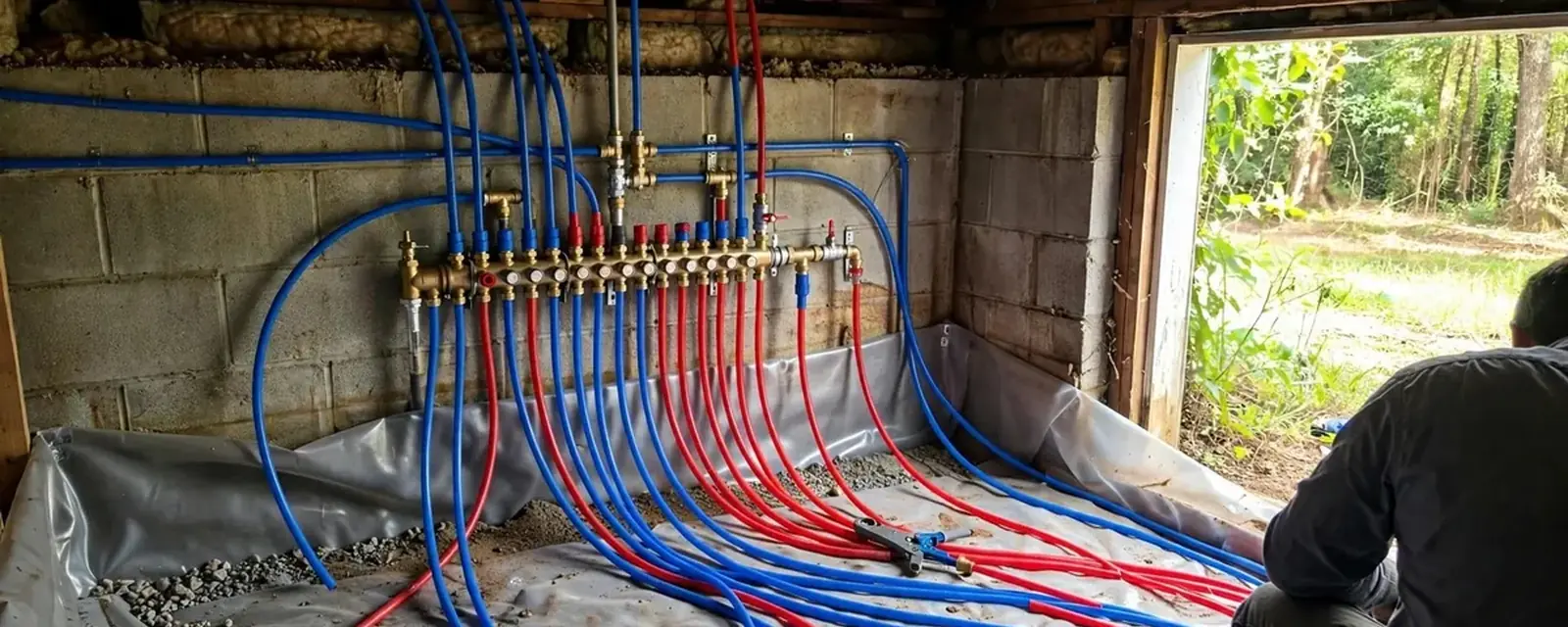
Signs the pipes in your walls are done
Most repipes start with a pattern, not one leak. You patch a pinhole under the sink, then another shows up in the hall closet a few months later. Each repair holds, but the pipe around it is thinning from the inside, and the next failure is usually close by.
Patterns that point to a repipe
- Pinhole leaks that keep appearing in different rooms, often with green or white crust on the pipe
- Brown or rust-tinted water when a tap has sat unused, especially from older steel lines
- Water pressure that has faded fixture by fixture, even though the city side is fine
- Stains on drywall or ceilings that dry out and come back
- Pipes that have been repaired several times with clamps, couplings or push-fit patches
Galvanized steel is the usual culprit in older houses. It corrodes from the inside, so the opening narrows until a shower runs weak even though the line looks fine from outside. Jacksonville Beach was settled in 1884 and has a large stock of older homes, so galvanized and aging copper runs are still out there behind plaster and paneling.
Repipe or repair: how we decide
A repipe costs more than a single repair, so we start by finding out whether the problem is one bad stretch or the whole system. We check the pipe material, look at fittings where we can reach them, and test pressure with the house shut off. If one run is bad and the rest is sound, we say so and fix only that run.
If the leaks are spreading, a leak hunt first is smart. Our leak detection service confirms where water is escaping before anyone cuts drywall.
PEX or copper: choosing the material
Both materials are accepted for house repipes, and either one is a big step up from corroded steel. The better pick depends on your walls, your budget and how you feel about each material. We will tell you which one we would put in your house and why.
| Factor | PEX | Copper |
|---|---|---|
| Installation in finished walls | Flexible tubing snakes through framing with fewer cuts and fewer joints | Rigid, needs more joints and more access holes |
| Disruption to the house | Usually less drywall opening | Usually more opening and more soldering |
| Corrosion behavior | Does not rust or pit like steel | Strong, but can pit in some water conditions |
| Look and feel | Plastic tubing, hidden in walls | Traditional metal, preferred by some buyers |
| Exposed runs | Needs protection from sunlight and impact | Handles exposed runs well |
| Typical use in older homes | Common choice for whole-house repipes | Common for partial work and visible lines |
Hot water lines and the water heater connection are where this choice matters most, so we plan them together. If you are also replacing the heater, see our water heater installation work, since the new connections are easiest to make at the same visit.
How a repipe works in a house people live in
We schedule the work so you are not without water for long. The new system is run alongside the old one where possible, then tied in and tested before we cut over. Expect a short shutoff for the cutover, and we tell you the timing before we start.
Access holes go where they are easiest to patch, often behind fixtures and in closets. We protect floors and clean up daily, and we pressure test every new line before you use it. Patching and paint are separate trades, so we talk through that handoff at the walkthrough.
Repiping is regulated work. It is done to the Florida Building Code, Plumbing, drawn from the International Plumbing Code (IPC), usually needs a permit and inspection, and must be performed under a properly licensed contractor as required by Chapter 489, Florida Statutes.
Want your pipes looked at before you commit?
Our plumbers will walk the house, check the pipe material and give you a clear price for a partial or whole-house repipe before any work starts. Same-day appointments when available. Call (904) 561-8133.
Permits and inspections for a repipe in Jacksonville Beach
The City of Jacksonville Beach uses a plumbing e-permit through its Building Inspection Division, part of Planning and Development. The application asks you to classify the work, and "re-pipe" is one of the listed classifications, alongside alteration, new, repair and fuel gas. It also asks whether your water source is city or well.
The city states that work may not begin until a permit is approved and posted on site, and its plans follow the Florida Building Code 2023 edition. We pull the permit for jobs we do, so you do not have to learn the form. If you ever want to confirm what applies to your project, the Building Inspection Division at 904-247-6100 can answer.
Low pressure, copper repairs and other jobs that lead to a repipe
Low water pressure is the symptom people notice first. Before recommending a repipe we check the simple things: a partly closed valve, a clogged aerator, a failing pressure regulator. If the pressure drops only at certain fixtures, or the water runs brown at first, the pipe is the likely cause.
Copper repairs are a different story. A single failed joint or a freeze-damaged section can often be cut out and replaced with new copper, which saves a repipe. If a run has multiple failures, we will explain when a repair stops making sense. For a cracked line that needs attention today, our burst pipe repair team can stop the water first.
What drives the price of a repipe
Every house is different, so we do not quote by square footage on the phone. These are the things that move the price, and we go through each one at the walkthrough.
Homeowner policies usually cover sudden and accidental water damage, but not wear, gradual leaks or the failed pipe itself. A repipe is normally a maintenance expense. If a pipe has burst, photograph the damage and check your own policy before repairs begin.
Tell us what you are seeing and we will explain which parts of the price apply to your house.
Repiping questions in Jacksonville Beach
Repeated pinhole leaks in different spots, rust-colored water, and pressure that fades across the house all point that way. A single leak does not mean the whole house needs it. We check the pipe material and test the system before recommending anything.
Yes. Partial repipes are common, such as replacing the hot water lines, one bathroom group or a failing run in the attic. We explain what the leftover old pipe is likely to do so you can decide with full information.
The City of Jacksonville Beach lists re-pipe as a classification on its plumbing e-permit. We pull the permit for work we do. For your own situation, ask the Building Inspection Division at 904-247-6100 what applies.
Not for the whole job. The new lines are run first and then tied in, so the main interruption is the cutover. We tell you the timing in advance so you can plan around it.
Both work well. PEX is easier to run through finished walls and does not corrode like steel, while copper is a good fit for exposed runs and for buyers who prefer metal. We recommend one based on your walls and your plans.
It can, if the cause is corroded or narrowed supply pipe. Low pressure can also come from a regulator, a valve or something on the city side. We check those before suggesting a repipe.
Main breaks and issues before the meter go to the city Water Division at 904-247-6241, weekdays 8:00 to 4:30. The city lists 904-247-6278 as its emergency line for water and sewer. Anything inside your property line is a plumber's job.
If your walls are showing the signs and you want a plain answer, our line is open at any hour.
☎ (904) 561-8133