
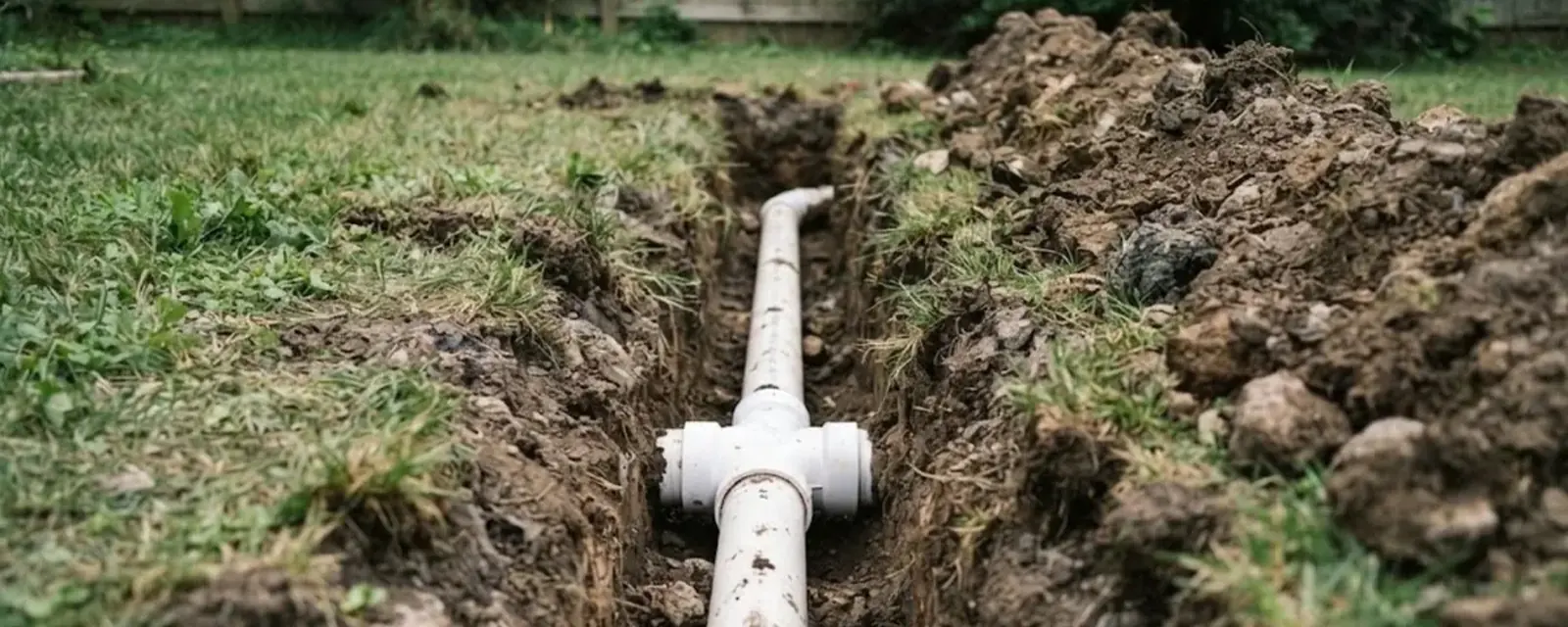
Signs a sewer line may be cracked
One slow drain is rarely a cracked sewer. A pattern is. Look for multiple fixtures draining slowly, a toilet that gurgles when the washer runs, sewage odor near a cleanout or a spot in the yard that stays wet or lush when the weather has been dry.
Common warning signs
- Repeat clogs that return soon after a cleaning
- Gurgling from toilets or tubs after other fixtures run
- Sewage smell indoors or near the yard
- Wet or sunken patches over the line path
- Cracks or settling in a slab or patio near the pipe run
- Sudden pest activity, since rodents and insects use broken sewer lines
- Backups that clear and return, which suggests roots or a shifted joint
Some cracks are partial, and flow continues while waste leaks out slowly. That is the sneaky kind. A line can look fine until the soil around it washes out and the pipe sags.
What a camera inspection shows
A small camera on a flexible cable goes into the line through a cleanout. It shows the pipe wall, joints, roots, sags (called bellies) and cracks. A locator can then mark the spot above ground so the repair is targeted. Our sewer inspection visit includes the video review, so you see what the plumber sees.
Ask for the recording and read it with the plumber. Cracks look like dark lines, roots look like fuzzy white or brown threads and a belly shows as standing water in the pipe. If the camera cannot get past a spot, that spot is the first suspect.
Spot repair, lining or replacement
| Method | How it works | Best for | Limits |
|---|---|---|---|
| Spot repair | Dig to the damaged section and replace a short length | One isolated crack or a broken joint | Needs access, restores yard or slab afterward |
| Pipe lining | A resin liner is cured inside the old pipe | Long runs with cracks or joint leaks and a mostly round pipe | Not suited to collapsed pipe or deep bellies |
| Replacement | Old pipe is removed and new pipe installed, by trench or by pulling | Collapsed, offset or badly deteriorated lines | Most disruption and planning |
The camera result decides. A single crack in clay or cast iron may call for a spot repair. A long line of leaking joints often suits lining if the shape is still intact. A collapsed section, a belly that holds water or heavy root intrusion across the run points to replacement.
A sewer repair is built to the IPC based Florida Building Code, Plumbing, and a repair in the street or right of way also involves the city and the utility.
Camera showed a crack or you are seeing backups?
Our dispatcher can line up a licensed plumber to scope the line and walk you through repair options. Call now, including after hours if sewage is backing up.
What to do while you decide
Cut back on water. Spread laundry across several days, skip long showers and run the dishwasher only when needed. Do not put chemical drain cleaner into a cracked line, because it sits in the pipe and attacks the damaged section without fixing it.
Keep a record. Photograph wet spots, note dates of backups and save camera footage. If sewage entered the house, photograph the damage before cleanup. Policies usually cover sudden and accidental events, not wear or gradual leaks, so read your policy and ask your agent.
When to call right now
Call for same-day help if sewage is coming up inside the house, more than one toilet is out of service or you smell sewer gas indoors. Our 24/7 emergency dispatch covers nights and weekends. A cracked line that is slowly leaking can wait for a scheduled visit, but do not let it sit for months.
If a sewer smell comes with dizziness or a headache, open windows and leave the area. If you are unsure whether it is a gas leak instead, leave the home and call the gas utility or 911 before anything else.
Septic tank still in the picture?
Some older homes near the beaches may still be on septic. A cracked drain from a septic home is a different question than a city lateral, and sometimes the best answer is to stop repairing and connect to city sewer. Our sewer line repair team can inspect the line and explain your connection path.
City sewer and the septic phase-out rebate
The City of Jacksonville Beach provides sewer itself. Anything in the street main is the city's, and anything on your side is yours. For the main, call the water and sewer office at 904-247-6241 on weekdays from 8:00 to 4:30, or the emergency line at 904-247-6278. If the camera shows the crack is on your lateral, that repair belongs to you.
The city also runs a septic phase-out rebate of up to $8,000 for connecting to city sewer and abandoning a septic tank. It covers a $1,000 capital improvement fee, a $750 sewer tap-in fee and up to $6,500 of contractor cost. If your home is still on septic, ask the city about eligibility before you spend money on repairs to an old system.
Rebate rules can change, so confirm with the office before you commit. Neptune Beach is a separate city, so a home in Neptune Beach should ask its own City Hall at 904-270-2400.
Why timing matters on a cracked line
A crack that leaks wastewater into the soil can undermine the ground around the pipe, and the pipe then sags further. Waiting turns a small spot repair into a longer replacement. Where the ground is low and wet, soil around a buried pipe can shift, so the sooner the camera goes in, the more options you keep.
There is also a health side. Sewage in the yard or crawl space is a hazard for kids and pets. If you see wet ground that smells, keep everyone off it and call a plumber rather than hosing it down.
Permits and who does the work
Sewer repairs that dig or replace lines usually involve permits. The Building Inspection Division at 904-247-6100 uses a plumbing e-permit, and work may not begin until it is approved and posted on site. The application includes a classification for repair and a type for private property drain, waste and vent. Ask what your repair needs and make sure your plumber pulls it.
Check the contractor too. Florida contractors are licensed under Chapter 489, Florida Statutes, and you can verify a license at MyFloridaLicense.com by license number, individual name or business name. A properly licensed individual must qualify the business.
Quick answers for Jacksonville Beach homeowners
No. Cracks widen as soil moves and roots grow in. Waste leaks out and soil washes in, which makes the problem worse. A camera inspection is the fastest way to learn how serious it is.
It depends on the pipe. Lining avoids trenching and works for cracks and leaking joints in a round pipe. It does not suit a collapsed section or a pipe with a deep sag. The camera footage settles the question.
Roots enter through a crack or a loose joint, so their presence usually means a defect. Cutting roots restores flow, but unless the opening is sealed, the roots return.
If the street main or several neighbors are affected, it is likely the city's. If only your property is affected, the problem is on your lateral. Call the city water and sewer office at 904-247-6241 on weekdays or the emergency line at 904-247-6278.
The city rebate is for connecting to city sewer and abandoning a septic tank, with up to $8,000 across the connection fees and contractor cost. It is not described as a repair program. Call the city to confirm eligibility for your address.
If you suspect a crack, our dispatcher can send a licensed plumber with a camera to see what is under the yard.
☎ (904) 561-8133