
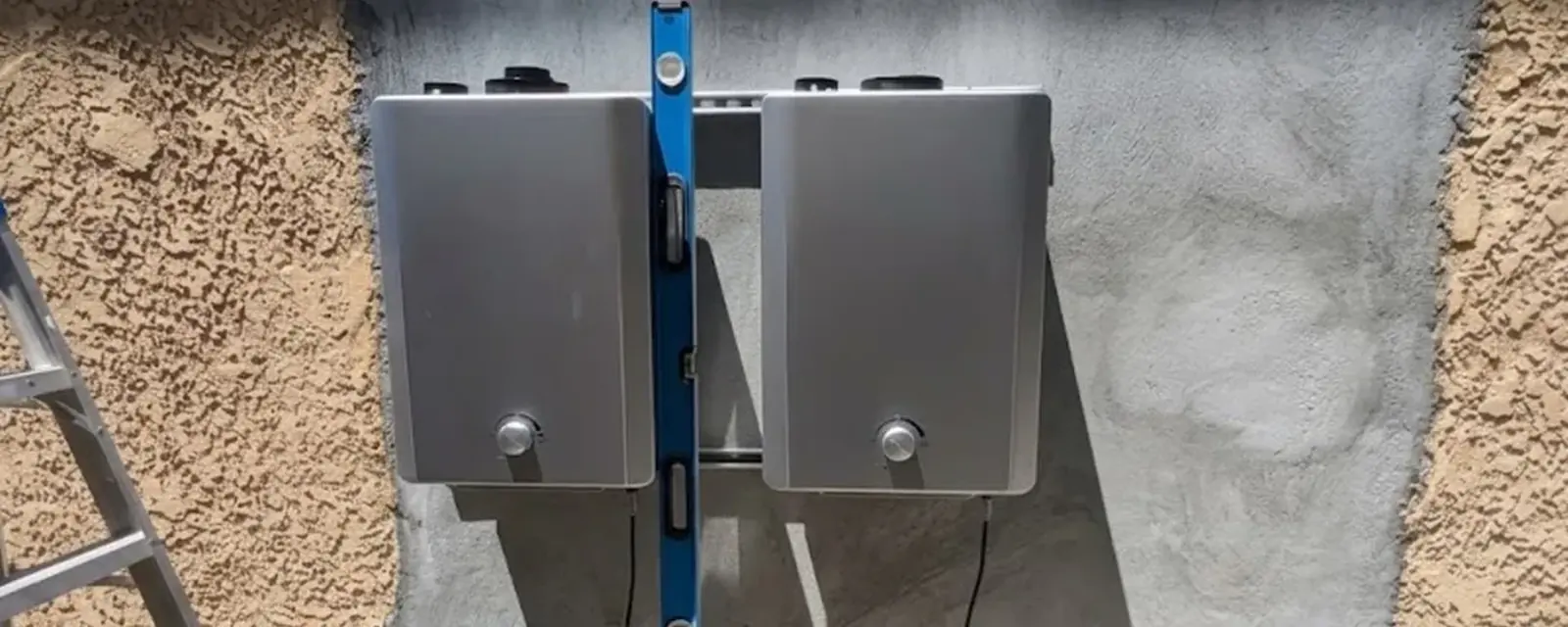
Why you wait for hot water even with a tankless unit
People expect a tankless heater to deliver instant hot water. It delivers instant heating. The water still has to travel through the pipe from the heater to the fixture, and whatever cold water sits in that pipe has to come out first. The farther the bathroom is from the heater, the longer the wait.
There is also a cold water sandwich effect. If you shut off the hot tap briefly and turn it back on, a short slug of cold water can pass through the heater before it fires again. A recirculation setup reduces both problems.
The main recirculation types
| Setup | How it works | Best fit |
|---|---|---|
| Dedicated return line | A separate pipe carries cooled water back to the heater, a pump keeps it moving | New construction or a repipe where the extra line is easy to run |
| Crossover valve under the farthest fixture | Uses the cold line as the return path, so no extra pipe | Existing homes with no space for a new line |
| Built-in pump and buffer | Some tankless models include a small pump and a mini tank | Homes that want a simpler install near the heater |
| On-demand push-button or sensor | The pump runs only when someone triggers it | Households that want less energy use and accept a short wait |
The crossover valve is the common retrofit. It warms the cold line a little, so cold taps may run lukewarm for a while, which some families dislike. A dedicated return line avoids that, but it needs access to the walls or crawl space.
Timers, sensors and the energy question
A pump that runs all day keeps hot water ready all day, and it also keeps the pipes warm and loses heat through every wall. That is wasted energy when nobody is home. Most owners pair the pump with a timer, a temperature sensor or a button.
Ways to control a recirculation pump
- Timer set for morning and evening routines
- Aquastat that runs the pump only when the return line cools off
- Push-button or motion sensor near the bathroom
- Smart controller tied to a phone app
- Pump left in manual mode and used only when the house is full
Insulating the hot line also helps, because it slows heat loss and cuts how often the pump has to run. Whoever does your water heater installation can tell you which of these your heater model supports. Some manufacturers specify certain pump types, and using the wrong one can affect your warranty.
A recirculation loop adds pipe and a pump to the system, so it falls under the IPC based Florida Building Code, Plumbing and the manufacturer's installation standards.
Tired of waiting for hot water?
Tell our dispatcher where the heater sits and which bathroom takes longest, and a licensed plumber can look at the pipe layout. Call now to set up a same-day appointment when available.
Who actually benefits from recirculation
If the heater sits near the kitchen and bath, you may not need anything. A wait that is short and tolerable does not deserve a pump. The strongest case is a large house or a two-story layout where the master bath is far from the heater, or a home where every gallon of waiting water is a habit that bothers you.
There is a water-savings angle too. Running the tap for a minute while it warms up sends clean water down the drain. A recirculation loop sends that water back to the heater instead. Whether that outweighs the extra electricity is a call you make based on how much you wait and how often.
What goes wrong with recirculation setups
Cold water in the hot line is the usual complaint, and the cause is often a crossover valve or a stuck check valve. A noisy pump means air in the line or a failing bearing. If hot water arrives lukewarm, the pump may be running without the heater firing, which is a setting or sensor issue.
If your tankless unit shows an error code or the temperature swings, deal with the heater itself first. Our tankless water heater technicians can check flow, descaling and venting before anyone adds a pump to a problem that has another cause.
| Symptom | Possible cause | What to do |
|---|---|---|
| Cold water at hot taps after the pump runs | Crossover valve or check valve | Call a plumber to test the valve |
| Pump hums but no warm water | Air trapped or pump failing | Call, do not run it dry for long |
| Lukewarm at the far bathroom | Timer off or sensor misread | Check the schedule, then call |
| Error code on the heater | Flow, venting or scale | Write down the code and call |
| Water hammer when the pump starts | Pressure change or loose pipe | Call a plumber to look at supports |
What you can do before calling
Check the pump schedule, confirm the power is on and look at the temperature setting on the heater. Wipe the control panel and read the display. Note when the problem started and which tap shows it. That information shortens the visit and keeps a plumber from guessing.
Avoid adjusting the heater's internal settings or opening the sealed cabinet. Gas models need correct venting and combustion, and electric ones need correct wiring. Both are work for a licensed plumber or electrician, and a recirculation add-on changes the water flow the heater expects.
Local water, permits and planning the add-on
Jacksonville Beach water comes from six city wells in the Floridan Aquifer, treated by aeration and chlorine. The city's report does not give a hardness number, so test your tap or ask the Water Division at 904-247-6241 for the annual report. That matters here because a tankless heater with a loop passes water through the heat exchanger more often, and scale tendencies affect how often it needs a flush.
A new recirculation line or a heater swap may involve a plumbing permit. The Building Inspection Division at 904-247-6100 handles the e-permit, and work may not begin until it is approved and posted. Ask them what applies to your job. If you live across the line in Neptune Beach, the permit office is Planning & Community Development at City Hall instead.
Quick answers for Jacksonville Beach homeowners
No. Some models include a built-in pump, some accept an external one and a few do not support recirculation at all. Check the manual or the manufacturer before buying a pump, because the wrong one can affect warranty and performance.
It uses some power, and the heater fires more often to replace heat lost from the pipes. Timers, sensors and insulated pipes keep that cost down. The savings in wasted water versus extra energy depends on your habits.
Often yes, using a crossover valve or an external pump kit. It depends on the heater model, the pipe layout and the fixture farthest from the unit. A plumber should review the setup before parts are bought.
The valve uses the cold line as the return path, so the cold line warms slightly. It is normal for that system. A dedicated return line avoids it but needs more pipe work.
The city's water quality report states no hardness figure, so do not guess. Test your tap or ask the Water Division for the annual report. If scale shows up, a regular flush and possibly a softener or filter keeps the heat exchanger working.
Ready to stop running the tap while you wait? We can send a licensed plumber to look at your loop options.
☎ (904) 561-8133