
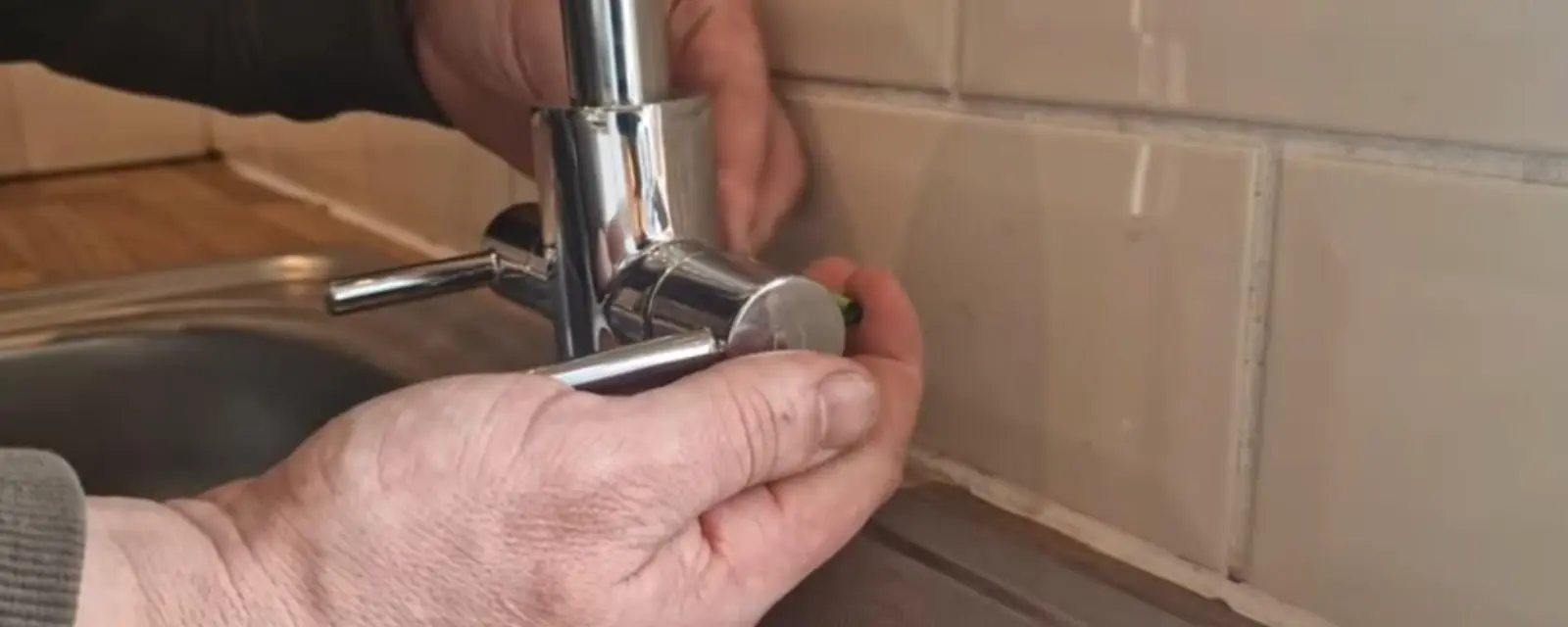
Start under the sink: the shutoff valves
Every sink, toilet and many appliances should have a small shutoff valve on the supply line, usually called an angle stop. Closing it stops water to that fixture only, so you keep the rest of the house running. Turn it clockwise until it stops. If the handle will not move, do not force it, because an old valve can snap and turn a drip into a flood.
A stuck or leaking shutoff valve is one of the most common calls we get, and it is often the reason a simple faucet repair becomes an emergency. Valves that have not been turned in years can seize or weep around the stem. Replacing them while we are there is cheap insurance, and we point out any that look tired.
A supply line has burst and water will not stop
If water is spraying from under a sink, the cause is usually a cracked braided supply line, a failed compression nut, or a seized or broken shutoff. Close the main valve at the meter or where the line enters the house. Then open a faucet at the lowest point to drain pressure. We can replace supply lines and valves on the same visit, including after-hours emergency calls.
Salt air, metal finishes and what it does to fixtures
Jacksonville Beach sits right on the Atlantic, and coastal air carries salt that attacks exposed metal over time. Chrome and brushed finishes can pit, handles can stiffen, and the small metal parts under the sink corrode faster than in an inland house. That is general coastal wear, not something we can put a number on.
What it means for you: do not assume a stiff handle is a simple cartridge problem. Look under the sink for green or white crust on the shutoff valve and supply nuts. If you see it, replace the valve along with the faucet repair. Outdoor spigots and fixtures near the ocean side of the house tend to wear first, so check those before a hose bib becomes a spray.
Repair or replace the faucet
Many drips are a worn cartridge, washer or O-ring, and a repair costs far less than a new fixture. Replace the faucet when the body is corroded or pitted, the finish is flaking, parts are no longer made, or the faucet is old enough that repairs keep recurring.
| Symptom | Usual cause | Repair or replace |
|---|---|---|
| Steady drip from the spout | Worn cartridge, washer or seat | Repair in most cases |
| Water at the base of the handle | Worn O-rings or loose packing | Repair |
| Weak or uneven flow | Mineral and debris buildup in the aerator or cartridge | Clean or repair |
| Pitted finish and stiff handle | Corrosion of the body | Replace |
| Leak from the faucet body | Cracked housing | Replace |
| Hard-to-find parts on an old fixture | Discontinued model | Replace |
Showers, tubs and outdoor spigots
Shower valves and tub faucets follow the same logic. A drip from the showerhead after you turn it off points to a worn cartridge inside the wall valve, and a tub spout that runs when the shower is on is usually a diverter problem. Replacing a cartridge is normally a faceplate-off job and does not require opening the wall.
A shower or tub that drains slowly is often a hair clog in the trap, and a snake or drain cleaning clears it. If several fixtures back up together, the problem is deeper in the line, and our drain cleaning team can take over. An outdoor hose bib that leaks around the handle or inside the wall may need a new valve or a freeze-protected replacement.
Faucets sold for home use are built to meet national plumbing product standards, and the IPC based Florida Building Code, Plumbing governs how they are connected. A shutoff that will not close is the usual reason a simple faucet job turns into a valve job.
Fixture failing at an inconvenient hour?
Call now and describe what you see. A licensed plumber can plan the repair and bring the right parts.
What decides the price of a faucet repair
Fixture jobs vary widely, so we explain it and give you a clear price before work starts.
Homeowner policies usually cover sudden water damage from a burst supply line or valve, not wear or the failed part itself. Photograph the damage and check your policy before cleanup.
Call and a dispatcher will explain what your repair involves.
If a fixture leak turns out to be part of a bigger problem, such as a slow leak inside a wall, our leak detection service can confirm it. We cover Neptune Beach and nearby towns too.
Faucet and Sink Repair questions in Jacksonville Beach
Yes. Dispatch is open 24/7, and a licensed plumber can come out after hours for a spraying supply line, a broken valve or a fixture that will not shut off. Same-day appointments are offered when available for slow drips.
Shut the valve under the sink first, or the main if it will not turn.
A drip after tightening usually means a worn cartridge, washer or valve seat inside the faucet, and more force will not fix it. Over-tightening can damage the seat. It is a quick repair for a plumber.
Look for the two small oval valves under the sink, one for hot and one for cold, and turn them clockwise. If they do not move or leak, do not force them. Close the main and call us.
Coastal air does tend to corrode exposed metal over time, so finishes and small parts can wear faster than inland. It is a general effect, and we look for corrosion around valves and nuts when we repair a fixture.
Yes. Bring it out, and we check that the fittings match and install it. If the old shutoff valves are corroded, we recommend replacing them at the same time.
Yes. A worn cartridge or diverter is the usual cause, and we can replace it without opening the wall in most cases. If the wall valve is damaged, we explain the options.
A stuck handle or spraying valve is easier to deal with before the water spreads, so reach out.
☎ (904) 561-8133