
What a slab-on-grade house is
A slab-on-grade home sits on a concrete pad poured directly on prepared ground. Before the pour, plumbers place the drain lines in the ground, and the concrete then covers them. Walls are framed on top of the slab.
Many homes in this part of Florida are built this way, although older homes and some elevated builds are different. If you are not sure what yours has, look for a crawlspace access panel or an open space under the floor. If neither exists, you likely have a slab.
What runs under the slab, and what does not
| Line | Usual location | What it means if it leaks |
|---|---|---|
| Drain and waste lines | Under the slab, then up into walls | Damp floor, odor, slow drains, sometimes sinking or settling |
| Sewer lateral | Under the yard to the street connection | Backups, soggy spots in the yard |
| Hot and cold supply | In walls and attic in many homes, under the slab in others | Hot spots on the floor, high bill, running meter |
| Gas lines | Often overhead or in walls, sometimes under the slab | Gas smell, leave the home and call the gas utility or 911 |
| Water heater connections | Closet or garage, above floor | Visible puddles |
The drains under a slab are the ones you cannot reach without breaking concrete or tunneling. Supply lines depend on the builder. Some houses run water lines overhead in the attic and drop them through walls. Others run them in the slab. Ask your plumber to tell you which yours has.
Why slab plumbing fails
Shifting soil
Ground moves as it wets and dries. A pipe held rigidly in concrete can be pulled at its joints.
Corrosion
Some pipe materials corrode where they touch concrete or soil, and the damage starts from the outside.
Abrasion
Pipe that rubs against concrete or a hard edge can wear through with expansion and contraction.
Roots
Tree roots look for water and can enter drain joints under the yard and slab.
Bad installation
Poor bedding or a bad joint at install may fail years later.
Signs of a slab leak
What to look for
- A water meter that keeps moving when every tap in the house is off
- A warm spot on the floor, especially with a hot water line leak
- The sound of running water when everything is off
- Damp carpet, lifted tile or a floor that smells musty
- Cracks in walls or floors that appear without another cause
- A water bill that rises with no change in use
Any one of these has other explanations. A toilet that runs, a dripping spigot or an irrigation leak can all move a meter. Rule those out first. If the meter still runs with everything off and the signs fit, a slab leak becomes likely.
Drain leaks under a slab behave differently from supply leaks. They do not raise the meter, since the water is leaving the house, not entering it. Instead you may notice a sour smell, a slow drain that no snake fixes, or a damp patch on the floor near a bathroom. A camera run through the line is the reliable way to see a crack or a separated joint.
How to test for a leak yourself
Turn off every tap, appliance and the ice maker. Find the water meter and note the dial or the small triangular flow indicator. If it moves, water is going somewhere. Then close the main valve at the house. If the meter stops, the leak is inside your property. If it still runs, the leak is before the house valve.
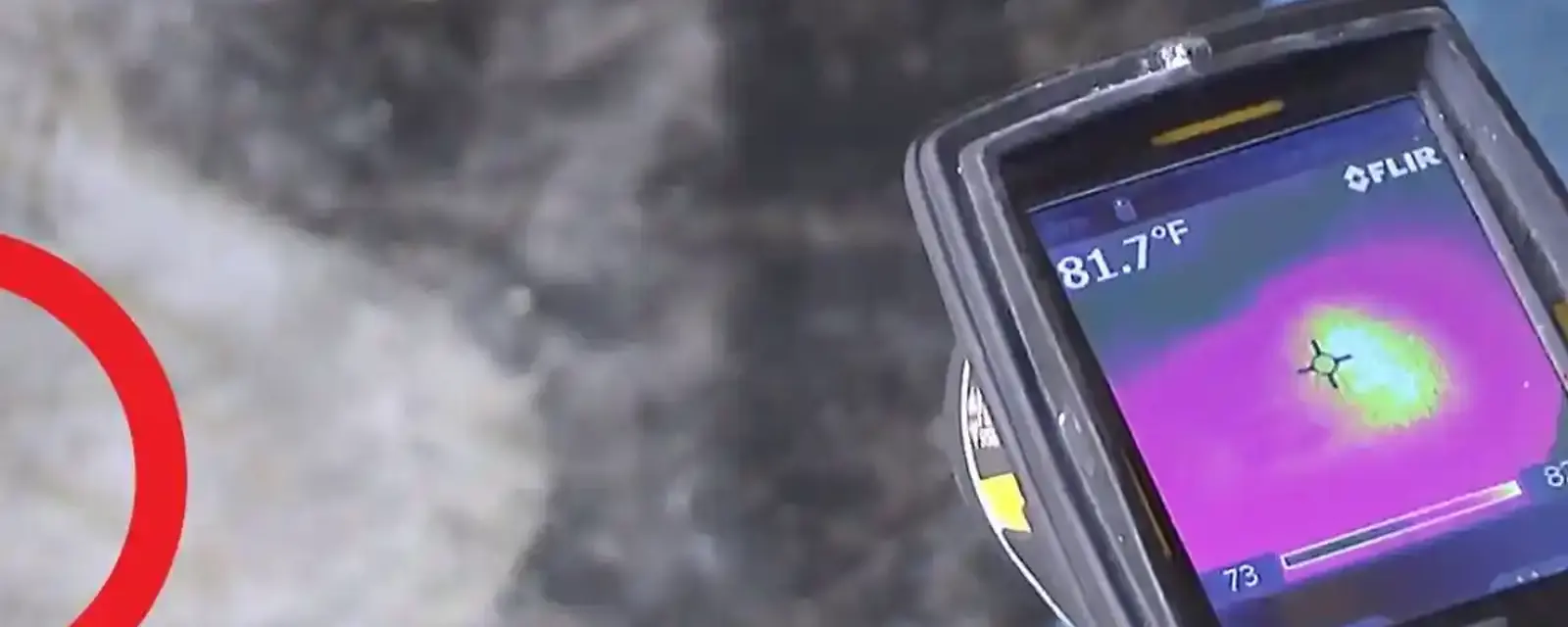
If the leak is inside, walk the house. Check under sinks, behind the toilet and at the water heater. If you find nothing, a hidden leak in a wall, overhead line or slab is possible. A professional leak detection visit locates it with acoustic listening, thermal imaging and pressure testing, so nobody has to guess where to cut.
Slab homes on low ground in Jacksonville Beach
Jacksonville Beach sits at or near sea level on San Pablo Island, and roughly two-thirds of the municipal area is water. That means the ground under a house is often wet or close to wet, which matters for slab plumbing. Moisture around a pipe makes corrosion and soil movement more likely, so a slow leak can go unnoticed.
The 2020 census counted 12,789 housing units in the city, with 11.2 percent vacant. A vacant or seasonal home matters for leaks, because water can run for a long time before anyone sees it. If you leave a home for a stretch, closing the main valve is a simple precaution. The city's water office at 904-247-6241 can answer questions on the city side of the meter.
Your options when a slab leak is found
| Option | What it involves | Best fit |
|---|---|---|
| Spot repair | Cut the slab at the leak and replace a short section | One clear failure in an otherwise sound line |
| Reroute | Abandon the leaking line and run a new one overhead or through walls | Supply lines that keep failing or are hard to reach |
| Repipe | Replace the supply system in the house | Multiple leaks or aging pipe throughout |
| Monitor | Track the meter and wait | Only for very small suspected leaks while you arrange a test |
The right choice depends on the pipe, the number of failures and how the house is built. Our slab leak repair team explains each option and gives a clear price before work starts. If the leak is a drain line, a camera shows where the pipe is cracked or separated.
What to do now, and when to call
If you suspect a leak, shut the main valve and call. Standing water under a slab can undermine the soil and soak flooring, and the damage gets worse with time. Insurance usually covers sudden and accidental water damage, not wear or the failed pipe itself, so photograph everything and check your policy.
If the water is coming from the yard or the line between the meter and the house, our water line repair work may apply. For homes in a neighboring town, our Neptune Beach service reaches the same way.
Pipe under a slab is installed and tested to the IPC based Florida Building Code, Plumbing before concrete is poured. That standard is the reason a slab job is inspected while the lines are still visible.
Quick answers for Jacksonville Beach homeowners
Many Florida homes are slab-on-grade, though not all. Older and elevated homes can differ. The easiest check is to look for a crawlspace or ask a plumber who has seen your pipe layout.
Sometimes. Rerouting a supply line overhead avoids the slab entirely. A drain line may need a spot repair or lining, which a camera inspection can help decide.
Close the main valve at your house and watch the meter. If it stops, the leak is inside your property. If it keeps moving, the leak is before your valve, and the city Water Division at 904-247-6241 handles the city side.
Policies usually cover sudden and accidental damage, not wear or the pipe itself. Policies vary, so read yours and photograph the damage.
The city counted 11.2 percent of its housing units as vacant in 2020. An empty home can leak for weeks without anyone noticing. Close the main valve if you will be gone.
If your meter moves with the taps off, call before the floor tells you the same thing.
☎ (904) 561-8133