
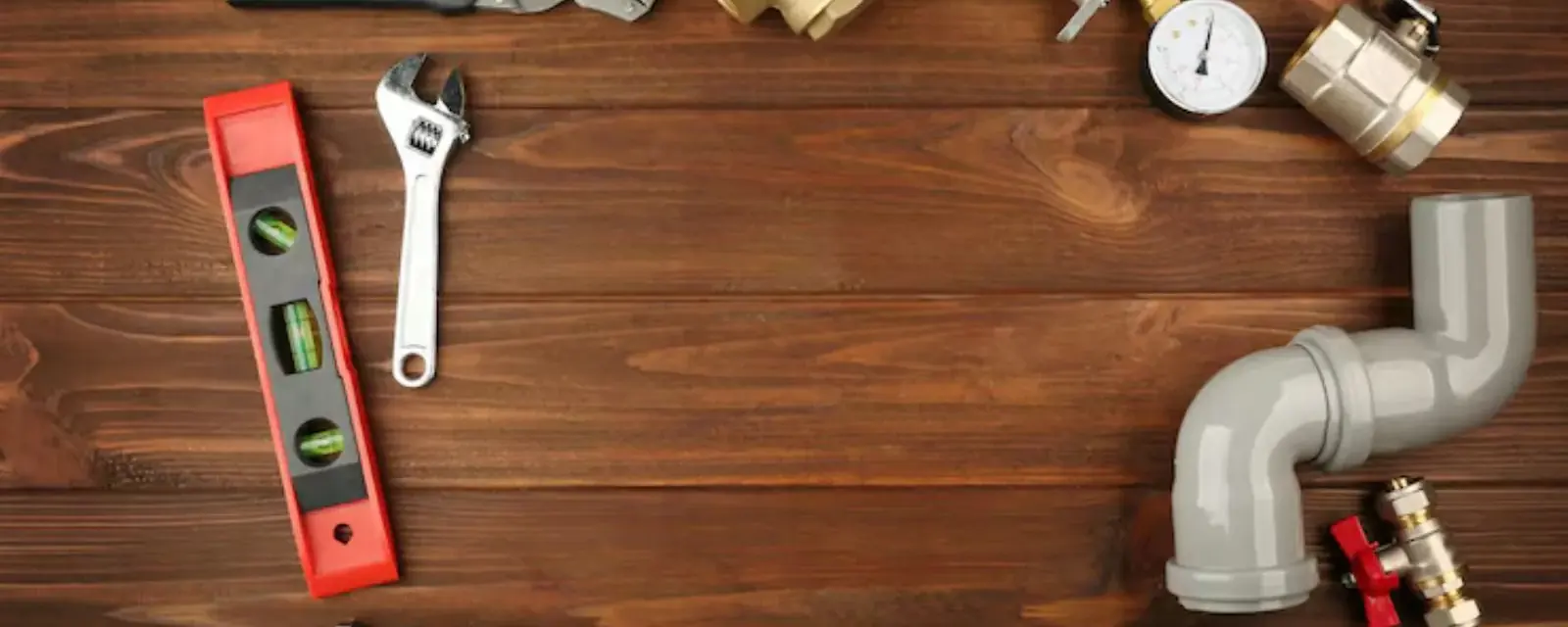
Three words, three different checks
People mix up plumb, level and square. Each describes a different direction, and each matters in a different part of an install.
| Term | Meaning | Typical tool | Where it matters in plumbing |
|---|---|---|---|
| Plumb | Perfectly vertical, true to gravity | Plumb bob or level held vertically | Vent and stack risers, shower valves, toilet flange stubs, wall-mounted faucets |
| Level | Perfectly horizontal | Bubble level or laser | Sink basins, tub rims, water heater platforms, toilet bowls |
| Square | Corners at 90 degrees | Framing square | Fixture cutouts, rough-in framing, tile layouts around a tub |
A fixture can be level and not plumb, or plumb and not square. A good install checks all three where they apply, because a mistake in one tends to show up in another.
Why plumb matters for drains
Drain pipe is not supposed to be level. Horizontal drains slope slightly so gravity carries waste along, and vertical stacks run plumb so waste drops straight down. A stack that leans or has a belly can hold water and debris.
If a horizontal run is too flat, solids settle and the line clogs. If it is too steep, water can outrun the solids and leave them behind. The right slope is a small, steady fall, and a plumber sets it with a level and checks it again before the line is covered.
On vertical runs, plumb keeps joints from being stressed. A stack hung out of plumb can pull on its fittings and loosen them as the building moves. That is how a slow leak starts behind a wall.
Fixtures that need to be plumb and level
Toilets
The bowl should sit level front to back and side to side, with the flange at the right height and the closet bolts straight. A rocking or tilted toilet stresses the wax ring.
Faucets and shower valves
A valve that sits crooked in the wall leaves a trim plate off-center and strains the supply lines behind it.
Sinks and basins
A basin that is not level pools water at one end, collects soap scum and can stress the drain connection.
Water heaters
A tank needs a level base. A tilted tank can stress the connections and may drain unevenly. Tall tanks also need to be straight so vent and relief piping line up.
Tubs
A tub set out of level drains slowly and leaves standing water. The shower pan needs the same care.
Water heaters are a good example of all three at once. The stand needs to be level, the tank should stand plumb, and the vent, gas and water connections have to meet it squarely. If one is off, the strain lands on a fitting, and fittings are where leaks start.
Signs something was not installed plumb
Clues you can see
- A faucet or showerhead that points to one side when the trim is straight
- Standing water along one edge of a sink, tub or shower floor
- A toilet that rocks or sits visibly off the wall
- Cabinet doors that do not line up after a new sink went in
- A wall-hung or tall fixture that leans away from the wall
- Slow drains where water pools at the low point
Many of these are fixable without major work. A toilet can be reset on a new wax ring and shimmed if the floor is uneven. A sink can be re-hung. A crooked valve inside a finished wall is harder, and it may need an access opening.
When walls and floors are not plumb
Real houses are not perfect. Walls lean slightly, floors slope and framing shifts over time. A plumber works with that by setting the plumbing true and shimming or adjusting the fixture to the room.
If the floor is badly out of level, a toilet or tub may need a solid base before it is set, not a thick bead of caulk. Cutting corners here leads to leaks and loose fixtures. We would rather fix the base and have the fixture sit right.
For new fixtures in a remodel, our plumbing installation work checks plumb, level and square at the rough-in stage, while the walls are still open. For an existing faucet or valve that leans, faucet repair often solves the problem with a reset or a new cartridge.
Older buildings and Jacksonville Beach
Jacksonville Beach was settled in 1884 and incorporated in 1907, and the 2020 census counted 12,789 housing units. A town with that much history has plenty of older buildings, and older buildings settle. A floor that was level when it was built may have a slope now, and walls can lean slightly.
In those homes, a new fixture should be set to the room as it is, with the supply and drain checked for strain. The city's land also sits at or near sea level, so ground moisture is part of the picture. If you notice a fixture that has started to tilt, that can be a sign of floor movement or a failing base, and it is worth having a plumber look.
How we check a job before we leave
Before a fixture is called finished, we check it the way an inspector would. A level goes on the basin or bowl, a plumb line or level goes on the valve and trim, and we run water to see where it goes. We watch the drain to see whether water leaves cleanly.
If something is off, we correct it while the tools are out. It is much easier to adjust a fixture on installation day than to come back after the caulk has cured and the cabinet is loaded.
What to do yourself and when to call
| Situation | You can try | Call a plumber when |
|---|---|---|
| Toilet rocks | Check the closet bolts for looseness | The rocking continues or there is water at the base |
| Faucet leans or wobbles | Tighten the mounting nut under the sink | The base is cracked or the supply lines are strained |
| Water pools in a basin | Check with a level and clean the drain | The fixture is out of level or the drain is slow |
| Water heater looks tilted | Do not move it. Turn off power or gas if there is a leak | The tank tilts, leaks or the connections look stressed |
If you are renovating a home in Neptune Beach or another nearby town, our Neptune Beach plumbers cover the same work from our Jacksonville Beach base.
Slope and vertical alignment are not only craft preferences. The IPC based Florida Building Code, Plumbing sets minimum drain slope, which is why plumb and level are checked at inspection.
Quick answers for Jacksonville Beach homeowners
Plumb means exactly vertical, true to gravity. A plumb pipe or fixture hangs straight up and down, the way a weighted line does. It is different from level, which means horizontal.
Plumbing takes its name from the Latin word for lead, plumbum, since lead was used for pipes. The word plumb in the vertical sense comes from the same root, through the lead weight on a plumb line.
No. Horizontal drain lines slope slightly so waste flows along with gravity. Vertical stacks are plumb. A drain that is perfectly level can collect solids and clog.
Yes. A toilet that rocks or tilts can break the wax seal and leak. If the floor is uneven, a plumber can shim the bowl or fix the base.
Many homes have settled over decades, and a floor that was flat when built may not be now. We set new fixtures to the room as it is. If a fixture has started to tilt on its own, floor or base movement is worth checking.
If a fixture sits crooked or a drain never quite empties, tell our dispatcher what you see and we will sort it out.
☎ (904) 561-8133